

Turns soccer drills
Explore structured turns football drills, soccer exercises, and individual training actions from the iSoccer library.
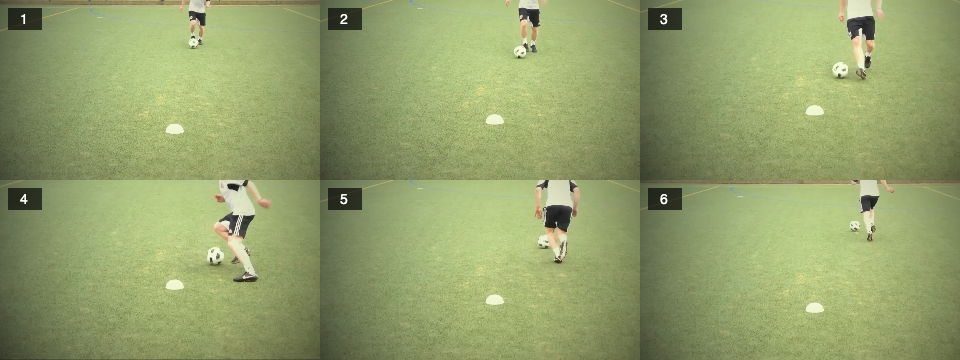
Turns – drag back
Player uses the sole of the foot to drag the ball backwards and turn away from pressure. This drill improves control, awareness, and the ability to quickly change direction to retain possession.
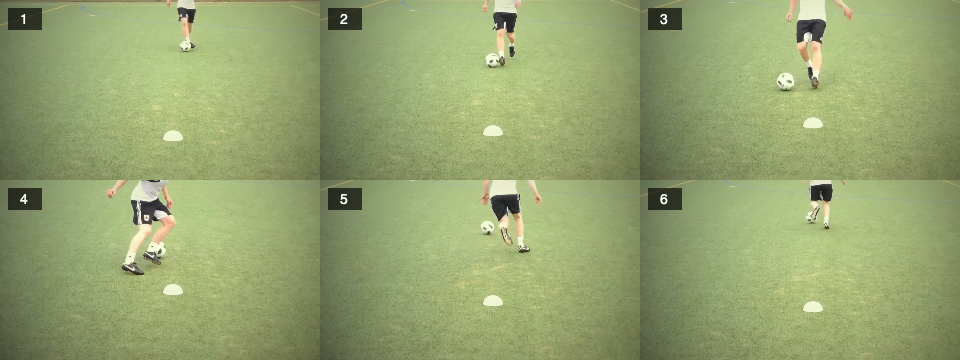
Turns – L drag back
Player uses the sole to drag the ball back and then pushes it to the side to form an L-shape turn. This drill improves control, coordination, and the ability to change direction quickly under pressure.
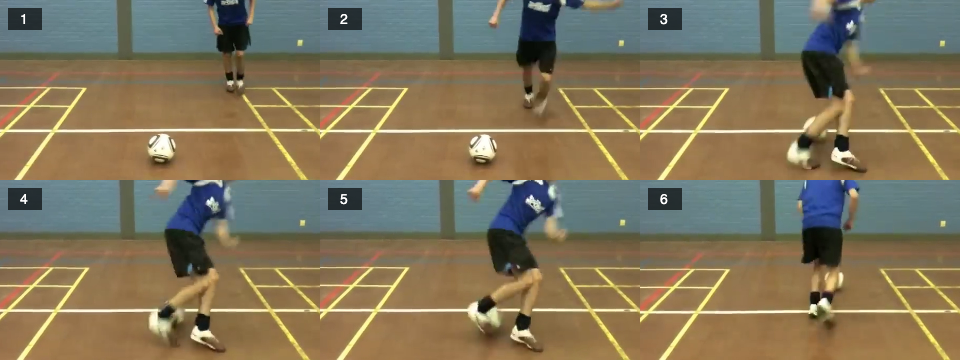
Turns – right Cruyff turn inside foot
Player uses the inside of the right foot to pull the ball behind the standing leg and turn sharply in the opposite direction. This drill improves deception, control, and quick directional change.
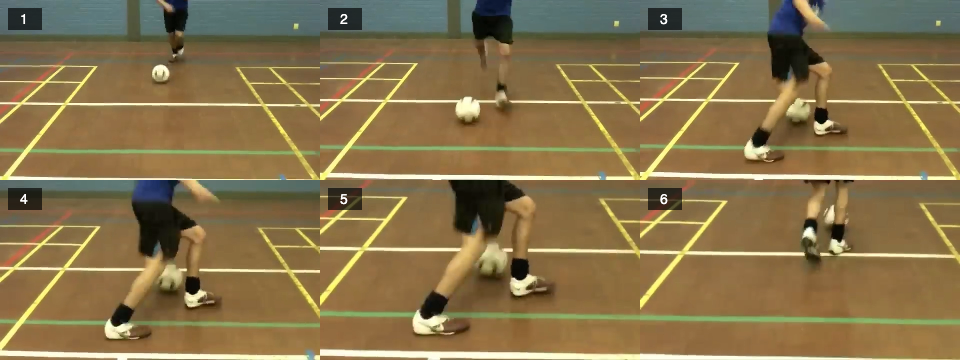
Turns – right Cruyff turn sole foot
Player uses the sole of the right foot to drag the ball behind the standing leg and turn sharply in the opposite direction. This variation improves control, balance, and the ability to execute the Cruyff turn with a different contact surface.
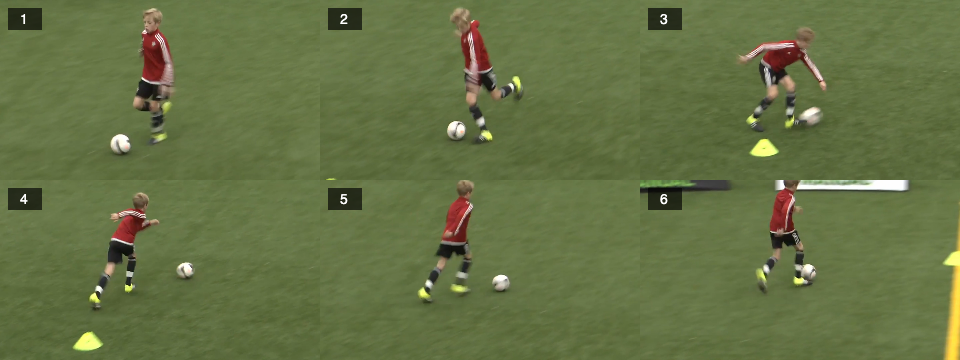
Turns – left stepover turn
Player uses the left foot to perform a step over and then turns with the ball to change direction. This drill improves coordination, deception, and control when linking a step over into a turning movement.
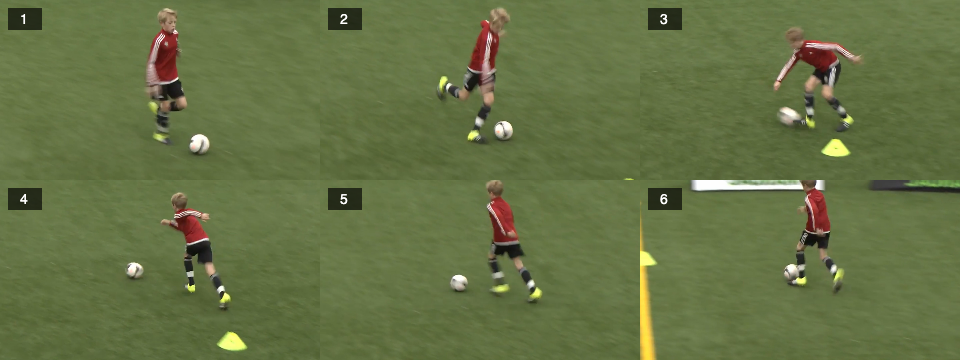
Turns – right stepover turn
Player uses the right foot to perform a step over and then turns with the ball to change direction. This drill improves coordination, deception, and control when linking a step over into a turning movement.
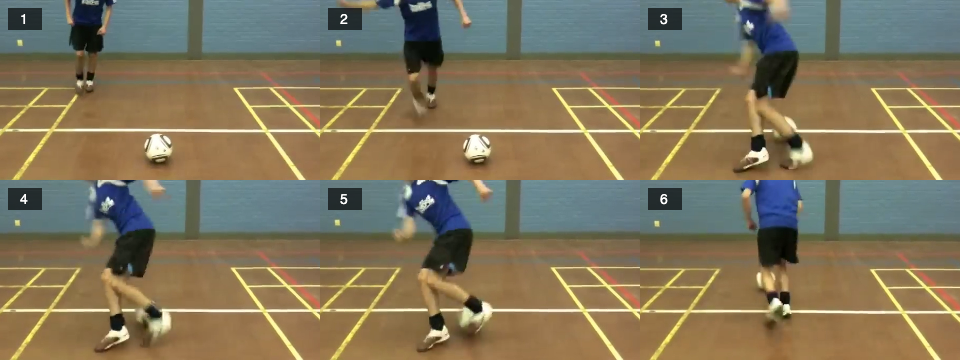
Turns – left Cruyff turn inside foot
Player uses the inside of the left foot to pull the ball behind the standing leg and turn sharply in the opposite direction. This drill improves deception, control, and quick directional change.
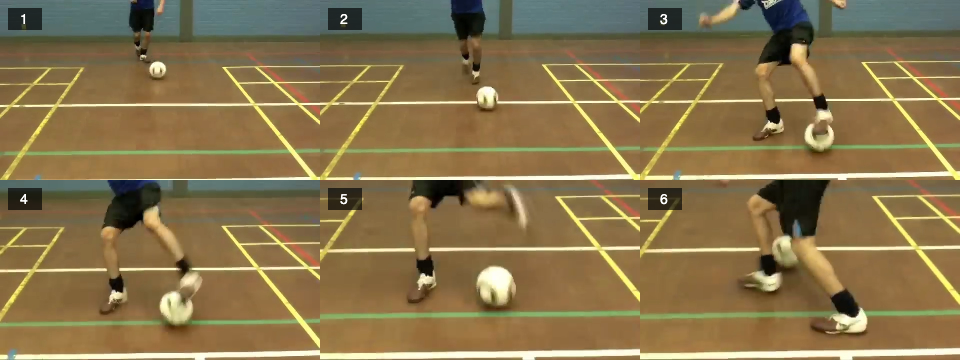
Turns – left Cruyff turn sole foot
Player uses the sole of the left foot to drag the ball behind the standing leg and turn sharply in the opposite direction. This variation improves control, balance, and the ability to execute the Cruyff turn with a different contact surface.
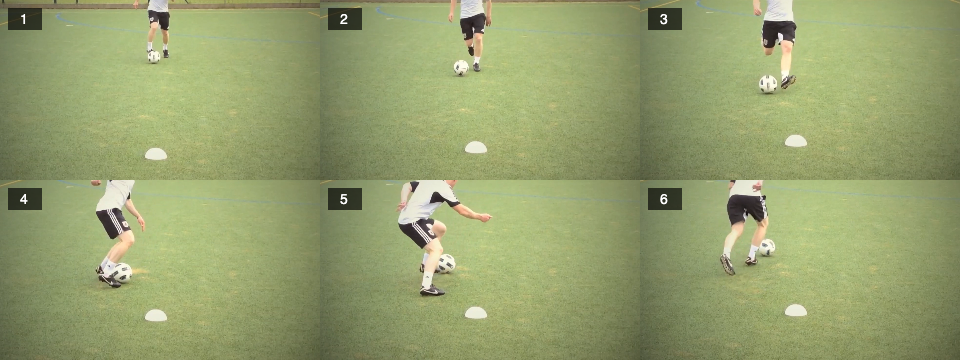
Turns – right inside cut turn
Player uses the inside of the right foot to cut the ball across the body and turn into a new direction. This drill improves control, timing, and the ability to quickly change direction under pressure.
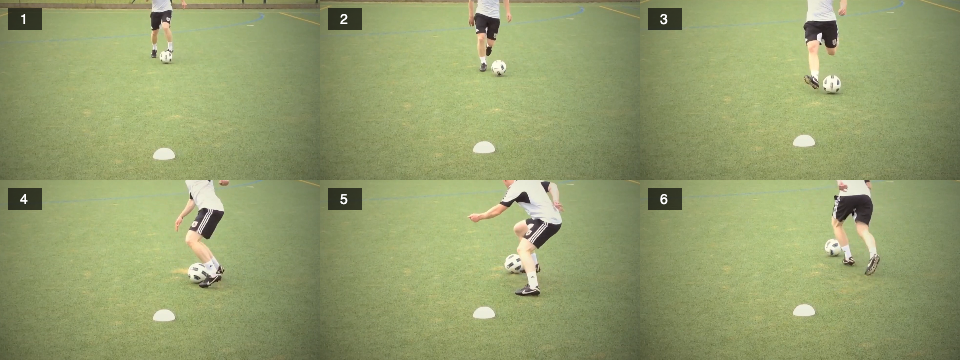
Turns – left inside cut turn
Player uses the inside of the left foot to cut the ball across the body and turn into a new direction. This drill improves control, timing, and the ability to quickly change direction under pressure.
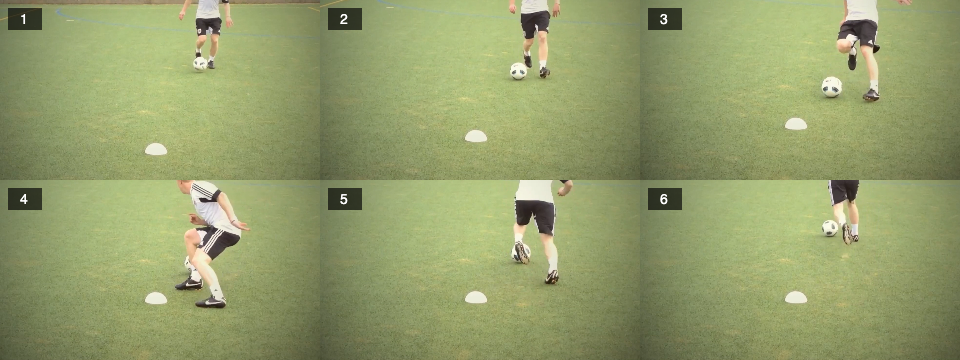
Turns – right outside cut turn
Player uses the outside of the right foot to push the ball across and turn into a new direction. This drill improves control, speed of execution, and the ability to change direction quickly while dribbling.
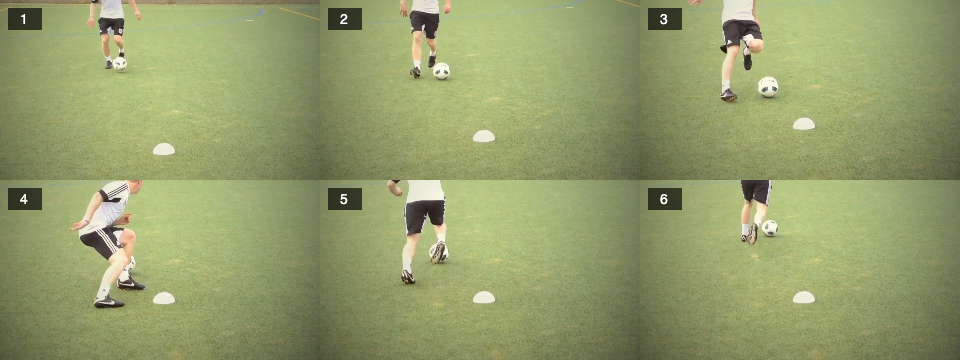
Turns – left outside cut turn
Player uses the outside of the left foot to push the ball across and turn into a new direction. This drill improves control, speed of execution, and the ability to change direction quickly while dribbling.
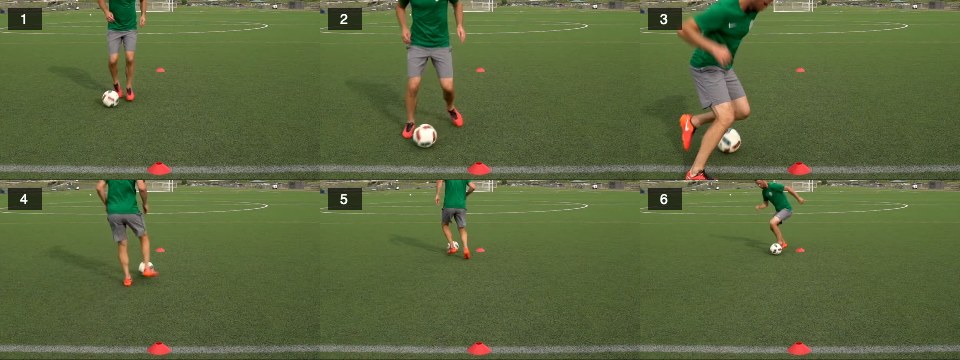
Turns – right hook pull turn
Player uses the right foot to hook the ball and then pull it back to turn into a new direction. This drill improves control, coordination, and the ability to quickly change direction under pressure.
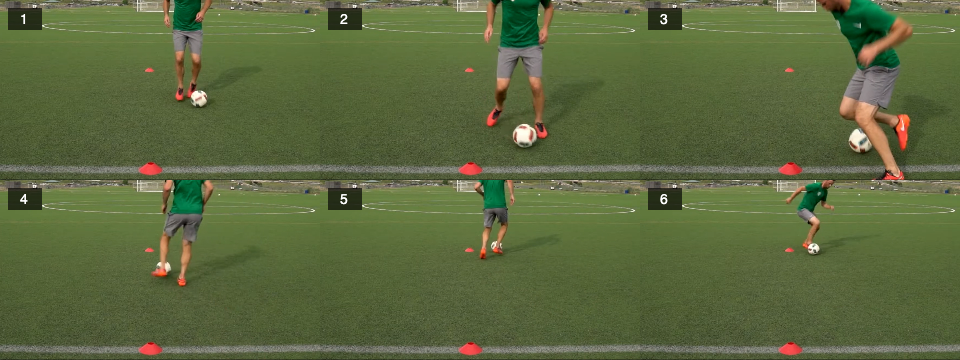
Turns – left hook pull turn
Player uses the left foot to hook the ball and then pull it back to turn into a new direction. This drill improves control, coordination, and the ability to quickly change direction under pressure.
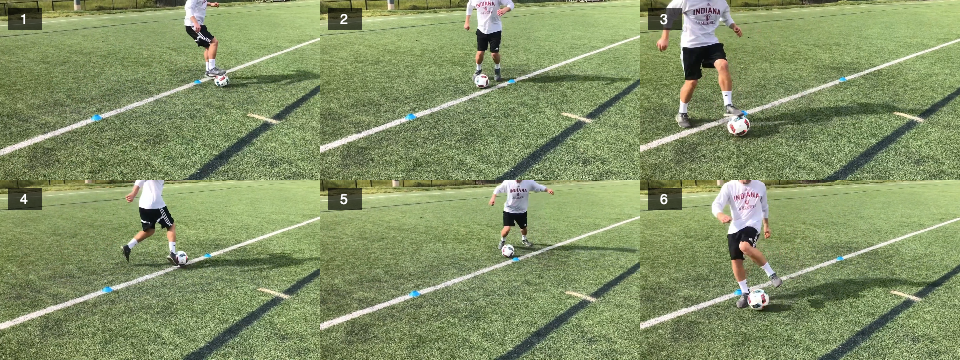
Turns – sole turn combo
Player uses the sole of the foot to perform multiple turning movements in sequence, changing direction with each action. This drill improves control, coordination, and confidence using the sole to turn under pressure.
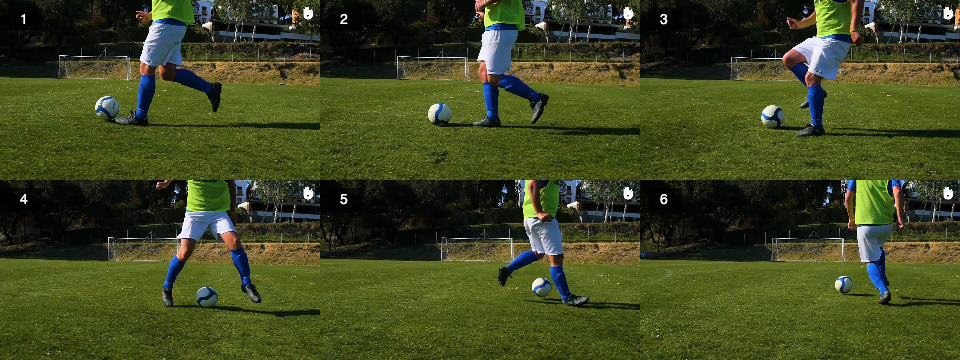
Turns – Marseille turn
Player uses both feet to roll the ball under the body while spinning to change direction. This drill improves balance, coordination, and the ability to escape pressure using a classic turning skill.